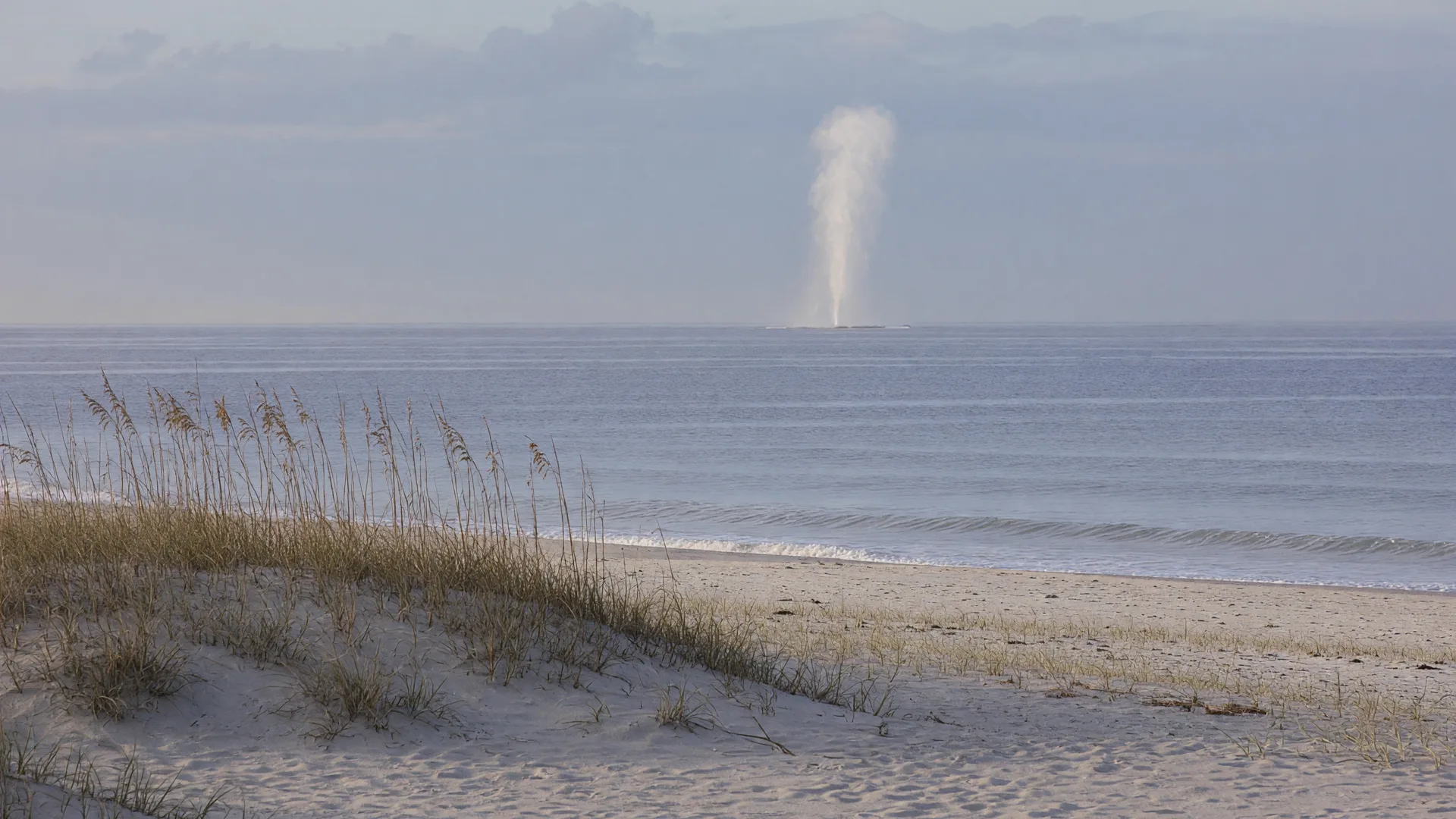
The 2026-2027 North Atlantic right whale calving season runs November 15, 2026 through April 15, 2027, when pregnant females migrate to the only known calving ground in the world, the shallow coastal waters off Florida and Georgia. The stretch of Atlantic off Ormond Beach is a known sighting area, with sightings regularly reported December through March and February often the best month. For anyone living in or touring an oceanfront condo here, it is one of the most remarkable parts of the winter calendar, and you can watch it from shore without a boat.
Why the Whales Come Here
The shallow coastal waters off Florida, Georgia, and South Carolina are the only known calving ground for the North Atlantic right whale, one of the most endangered whale species in the world. Pregnant females migrate south each winter to give birth and nurse their calves close to shore. NOAA Fisheries tracks the season closely and publishes guidance each year for boaters and coastal residents.
Sightings Close to Ormond Beach
Mother-and-calf pairs have been spotted close to shore off Ormond Beach and Ormond-By-The-Sea in recent winters, and the whales are seen every year somewhere along the Atlantic coast between Jacksonville and Cape Canaveral. Recommended shore vantage points nearby include the 800-foot Flagler Beach Pier, the Sunglow Pier in Daytona Beach Shores, and the Main Street Pier in Daytona Beach, plus the open beachfront along A1A and the Ormond Scenic Loop and Trail between Ormond Beach and Flagler Beach. There are no commercial whale-watching excursions in Florida, so sightings are made from shore, often with binoculars on a calm day.
The no-drive beach in front of 1239 Ocean Shore Blvd is itself a quiet, elevated stretch of shoreline, which makes winter balcony and beach walks a natural way to scan the horizon. If you spot a whale, the Florida Fish and Wildlife Conservation Commission encourages the public to report sightings, which helps researchers track the population.
How to Watch Responsibly
- Watch from shore. No commercial whale-watching tours operate in Florida; the responsible way to see right whales is from the beach, pier, or your own balcony.
- Give them space. Federal rules require vessels to stay at least 500 yards from right whales, and slow zones apply along the calving grounds during the season.
- Report what you see. Sightings reported to FWC and NOAA help protect a species with fewer than 400 individuals remaining.
Right whale facts above are drawn from NOAA Fisheries and FWC sources, which publish updated guidance each calving season.
Winter is a wonderful time to see the coast, whales and all. Contact Debbie Weller to tour Unit 7F6, and ask about the best winter mornings for a balcony view of the Atlantic.