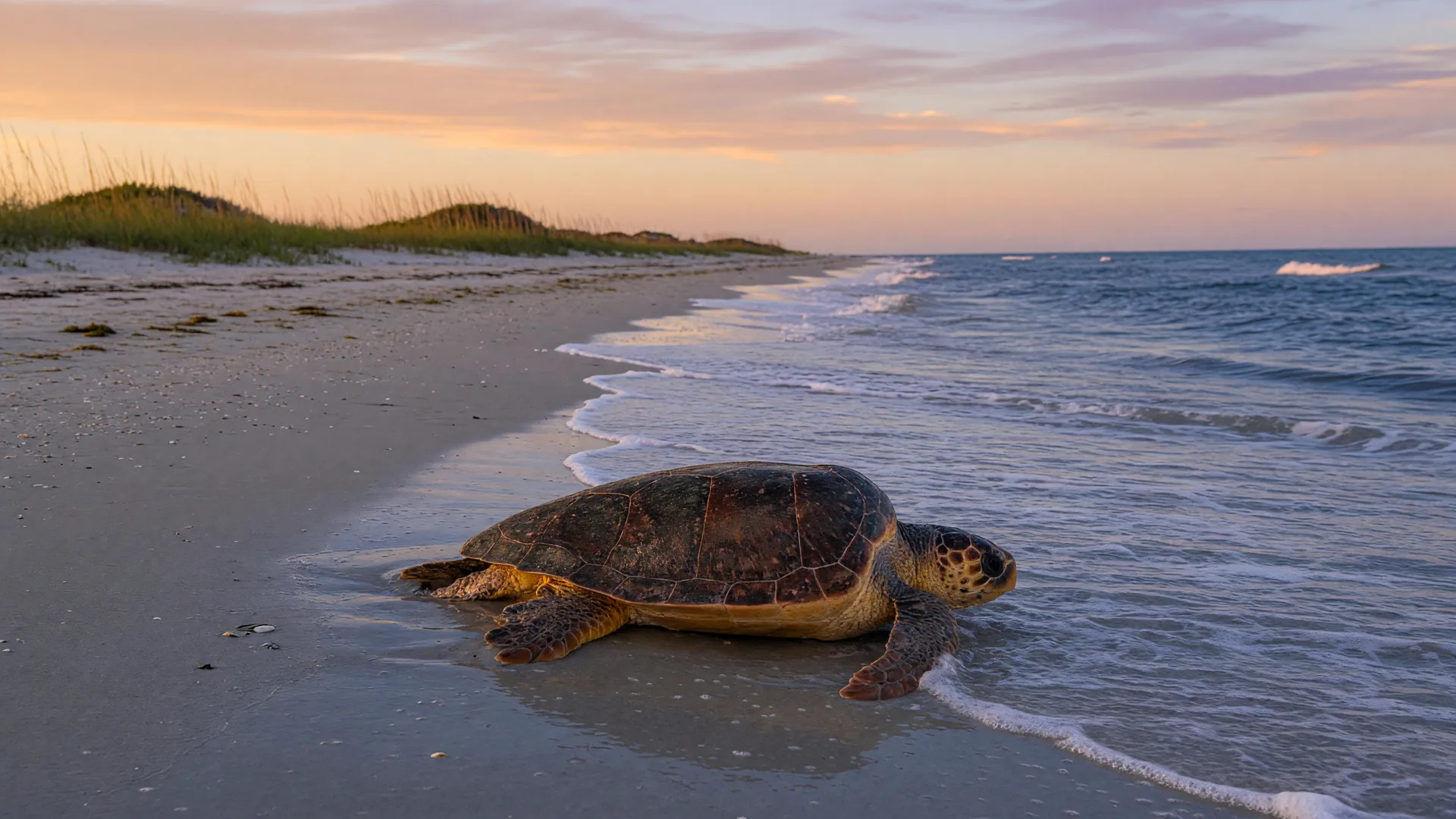
Sea turtle nesting season runs May 1 through October 31 on Volusia County beaches, and the no-drive stretch of sand in front of 1239 Ocean Shore Blvd is part of it. For anyone living at or visiting this oceanfront condo in the fall, that means nests to respect, hatchlings to protect, and a rare chance to see conservation happening right outside the building.
When Nesting Season Runs
Volusia County officially tracks nesting from May 1 through October 31. Nesting activity peaks in summer, and hatchlings keep emerging into the fall, which means late-season surprises are common. In fact, the first confirmed nest of 2026 was laid in Ormond Beach on April 13, more than two weeks before the official season start, according to county turtle reports covered by FOX 35 Orlando.
Which Turtles Nest Here
Loggerheads are the dominant nesting species on Volusia's beaches, with roughly 1,300 or more nests in a typical season, per Volusia County's sea turtle program. Green turtles and leatherbacks also nest here, and the rare Kemp's ridley makes the occasional appearance. Florida overall is the epicenter of loggerhead nesting in the United States, so the sand you walk on every morning is genuinely important habitat.
Why the No-Drive Beach Helps
Ormond Beach's no-drive policy is good for more than just quiet mornings. Untracked sand means fewer tire ruts and less garbage that can trap hatchlings, and a quieter shoreline means adult females are less likely to be spooked mid-nest. It is one of those quality-of-life details, like dual balconies and impact glass, that makes this stretch of coast feel different from a typical Florida beach town.
How Beachgoers Can Help
- Keep your distance. Stay at least 30 to 50 feet away from nesting turtles and from staked or roped-off nest areas, and never disturb a turtle crawling to or from the ocean.
- Clear the sand by dark. Remove chairs, tents, umbrellas, toys, and trash before sunset, and fill in large holes so turtles and hatchlings are not trapped.
- Go lights out. No flashlights, flash photography, or fireworks on the beach at night. Artificial light disorients hatchlings and can discourage females from nesting, so keep balcony and window lights off or shielded when facing the ocean.
- Report, don't rescue. If you see a sick, injured, or dead turtle, call a beach safety officer or the FWC Wildlife Alert line at 1-888-404-3922. Never capture a turtle or push it back into the water.
From the north and south balconies of Unit 7F6, the beach below is part of that protected system. Watching a loggerhead crawl out of the surf is a bucket-list Florida moment, and on a no-drive beach in Ormond Beach, it can happen right in front of your building.
Sea turtle season and oceanfront living go hand in hand here. Contact Debbie Weller to schedule a showing of Unit 7F6 and see the beach below the balconies for yourself.